
Pharmaceutical manufacturing requires precise control of airborne contaminants at every stage of production. Air Purifiers, Inc. designs, supplies, installs, and services complete pharmaceutical air filtration systems and pharmaceutical dust collection systems built to meet FDA, OSHA, and cGMP requirements.
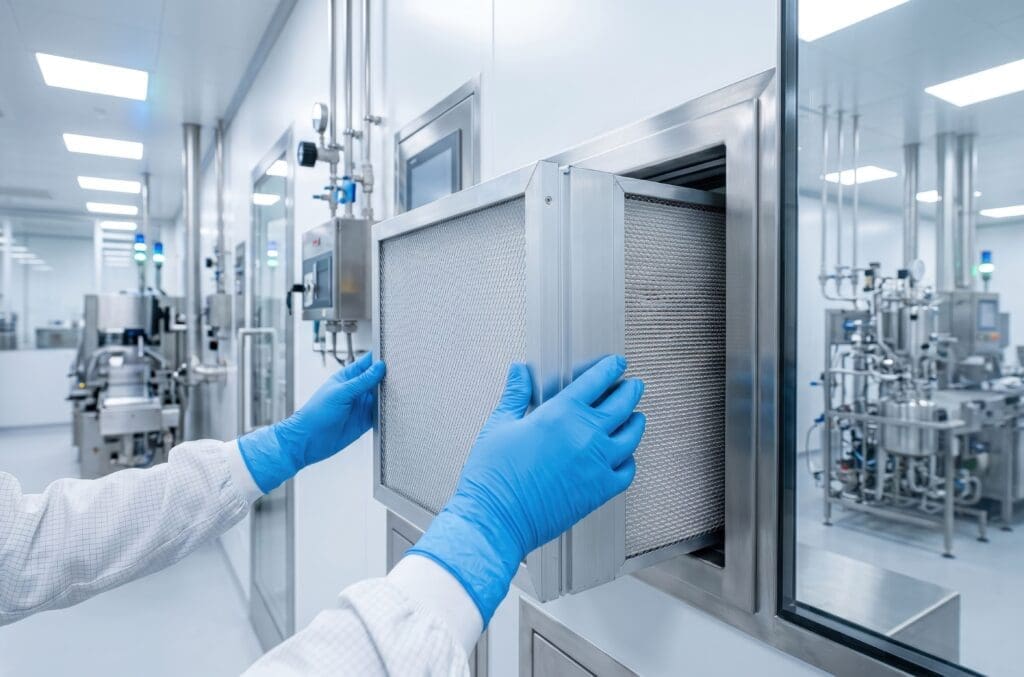
Airborne hazards in pharmaceutical manufacturing go well beyond general industrial dust. Fine powders from tablet pressing, submicron particles from API milling, solvent vapors from coating operations, and potent active ingredients from blending all require controlled capture and containment. Without the right systems in place, you face OSHA exposure violations, FDA inspection findings, and product contamination events.
Air Purifiers, Inc. designs systems for your specific processes, not off-the-shelf equipment that may not be adequate for your application.
Pharmaceutical manufacturing creates a range of airborne risks that require tailored filtration and dust collection solutions:
Our industry experience spans a wide range of pharmaceutical and life sciences facility types, including:
We are not a manufacturer selling a product line. Air Purifiers, Inc. designs, supplies, installs, and services complete pharmaceutical air filtration systems and pharmaceutical dust collection systems for your specific facility and processes.
Pharmaceutical cleanrooms and controlled production areas must meet ISO 14644 classifications, typically ISO 5 through ISO 8. We design multi-stage filtration systems using HEPA filters at 99.97% efficiency at 0.3 microns, or ULPA for more critical applications.
Dust collection systems for pharmaceutical environments capture particulate at the source, directly at tablet presses, coating pans, blenders, and mills. We configure cartridge collectors and baghouse collectors for these applications with filter media selected for your specific materials and dust volumes
Many pharmaceutical powders are classified as combustible dusts under NFPA 654. We design dust collection equipment with deflagration venting or suppression, isolation valves, and static grounding built in.
Every pharmaceutical air quality system we design is built with your compliance obligations in view. Systems are constructed from appropriate materials, including stainless steel and pharmaceutical-grade components where required.
Air Purifiers, Inc. has been providing air quality solutions for over 40 years. We are a complete system integrator, not a product manufacturer. You have one point of accountability for design, equipment, installation, and service.
Our team knows what FDA inspectors look for and designs systems that support your compliance position for the long term. You can see examples of our work in our case studies.
Air Purifiers, Inc. serves pharmaceutical and life sciences facilities throughout the following states:
Tell us about your facility and current air quality challenges. We will assess your situation and help you determine the right system for your processes and compliance requirements.

We get a lot of questions from facility managers, EHS professionals, and plant operations teams evaluating pharmaceutical air quality systems. Here are the answers to the most common ones.
Pharmaceutical air filtration systems control airborne contamination in manufacturing environments to meet FDA cGMP, ISO 14644, and OSHA requirements. Without properly designed systems, facilities risk compliance violations, product contamination, and worker health exposure. They are a required part of operating a compliant pharmaceutical manufacturing environment.
Air filtration manages the overall air quality of production and cleanroom environments using HEPA or ULPA filtration. Dust collection captures particulate at the source, directly at process equipment like tablet presses, blenders, and mills, before it becomes airborne. Most pharmaceutical facilities need both as part of a complete air quality strategy.
HEPA filters are rated at 99.97% efficiency at 0.3 microns and are standard for most pharmaceutical cleanroom applications. ULPA filters achieve 99.999% efficiency at 0.12 microns and are used in more critical environments. The right filter grade depends on your cleanroom classification and the regulatory requirements for your production area.
A BIBO system is a safe-change filter configuration that allows filters to be replaced without exposing personnel to collected material. It is required in facilities handling high-potency APIs or other hazardous compounds where direct contact during a filter change is a health risk. Air Purifiers, Inc. designs BIBO configurations as part of complete pharmaceutical dust collection systems.
NFPA 654 requires facilities handling combustible dust to assess and control deflagration risk. A properly designed system addresses this with deflagration venting or suppression at the collector, isolation devices in the ductwork, and static grounding throughout. System design and documentation both factor into your compliance position under this standard.
Common indicators include inconsistent pressure readings, visible dust migration, evidence of filter bypass, and missing or incomplete maintenance records. If your system was not built to pharmaceutical-grade material standards, that is also a concern. A system assessment from Air Purifiers, Inc. can identify the gaps and tell you what remediation or replacement would involve.
ISO 14644 defines cleanroom classifications based on airborne particle counts. Your air filtration system is the primary mechanism for achieving and maintaining those classifications. It must be properly designed, commissioned, and maintained to meet the standard for your production area.
In many cases, yes. Existing systems can be retrofitted with higher-efficiency terminal filtration or supplemented with source-capture units at process equipment. Whether an upgrade is practical depends on your system’s capacity and condition. Air Purifiers, Inc. can assess your current setup before you commit to a direction.
Routine maintenance includes filter inspections and replacements, pressure drop monitoring, hopper and discharge cleaning, inspection of safe-change components where applicable, and documentation of all service activity. Air Purifiers, Inc. provides scheduled maintenance and service programs for pharmaceutical dust collection systems of all types.
Look for demonstrated experience in pharmaceutical environments specifically. They should understand cGMP, ISO 14644, and NFPA 654 requirements without prompting. They should offer complete system design, installation, and ongoing service, not just equipment supply. A provider without a service program is not the right fit for a pharmaceutical facility.


