
Schools and universities face a unique air quality challenge. High occupancy, aging infrastructure, and growing pressure from parents, staff, and regulators have made indoor air quality (IAQ) a front-line concern for facility teams across the country.
Air Purifiers, Inc. works directly with school districts, universities, and private institutions to design and implement air filtration systems built for the demands of educational environments. From single classrooms to multi-building campuses, we help you create cleaner, safer spaces where students and staff can perform at their best.
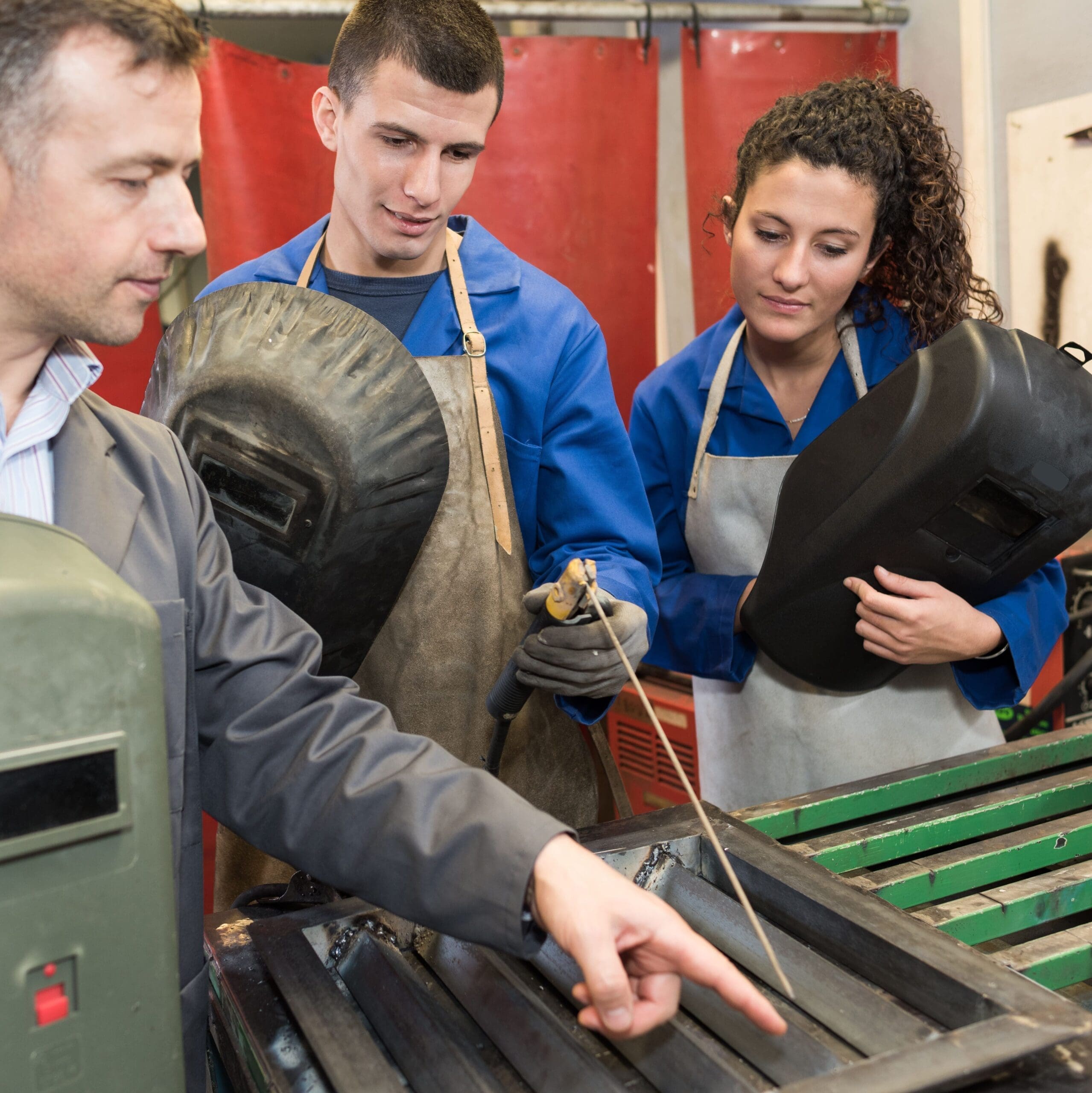
Clean air in schools is no longer optional. It is a measurable factor in student health, attendance, and performance.
Research consistently links poor indoor air quality to increased absenteeism, reduced concentration, and lower academic performance. When you pack 25 to 30 students into a 900-square-foot classroom, the air quality challenge becomes immediate. Carbon dioxide builds quickly, particulate matter accumulates, and without the right filtration in place, that environment works against everyone in it. Clean air matters everywhere, not just manufacturing industries.
Key drivers pushing schools toward better air filtration include:
Air filtration for schools is no longer a facilities afterthought. It is a core part of how your institution protects the people inside it.
There is no single fix for school air quality. Effective IAQ management requires a layered approach tailored to your building’s age, layout, and ventilation infrastructure.
Upgrading to MERV-13 or MERV-14 filters is one of the most effective ways to reduce fine particulate matter, bacteria carriers, and allergens in your building. Most upgrades work with your existing system, though older infrastructure should be evaluated for compatibility with static pressure before the switch.
In classrooms without reliable central air distribution, portable HEPA units deliver the air changes per hour needed to maintain safe, compliant air quality. They are a practical solution for older buildings, modular classrooms, and any space with limited ductwork access.
Chemistry labs, art rooms, and vocational spaces produce volatile organic compounds that standard particulate filters cannot address. Activated carbon filtration captures these chemical contaminants at the molecular level, keeping specialized spaces safe for students and instructors.
If your school uses solvent-based materials, adhesives, or chemical reagents, molecular filtration should be part of your IAQ plan.
Technical schools and colleges with hands-on program facilities generate real industrial contaminants, including welding fumes, wood dust, ceramic particulates, and chemical vapors. These environments require purpose-built filtration systems designed to protect students and instructors, not standard HVAC upgrades.
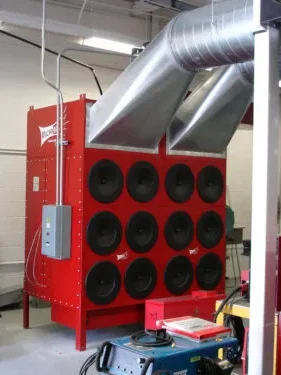
Welding fume is one of the most hazardous contaminants produced in any training environment, and student-facing shops require systems that protect each workstation while managing overall air quality. Air Purifiers, Inc. has designed and installed complete welding fume extraction systems for vocational schools and military training facilities, including station-level source capture, centralized filtration, and downdraft benches for brazing and soldering areas.
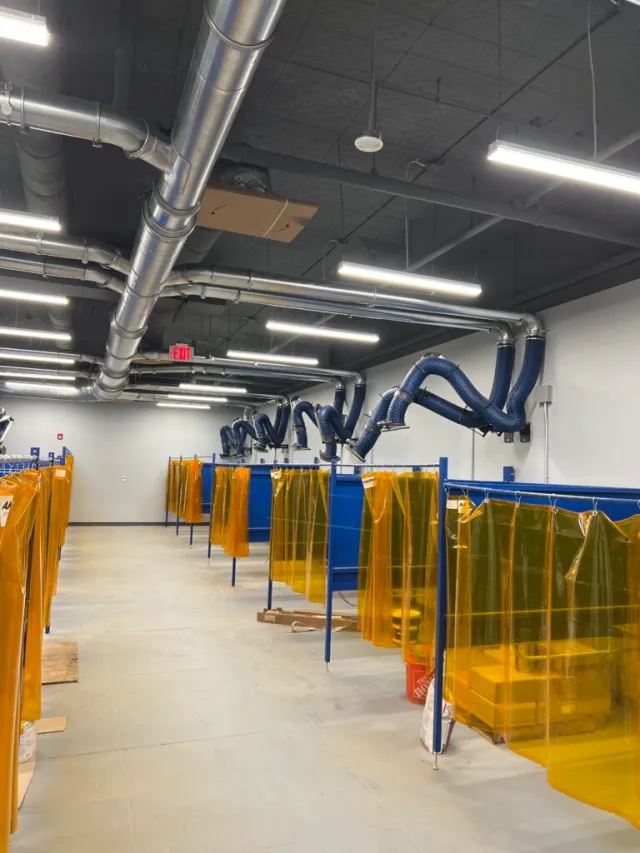
Wood dust in school woodshop programs is a combustible hazard that requires NFPA-compliant systems, including explosion relief, spark detection, and abort gate controls. Air Purifiers, Inc. has completed NFPA-compliant dust collection installations for school districts in central New Jersey, with one district returning for a second system after the success of the first project.

Ceramic dust, resin particles, and fine particulates generated in art and fabrication programs are recognized respiratory hazards that standard ventilation does not adequately address. Air Purifiers, Inc. has installed self-contained HEPA filtration booths for studio environments, creating source-capture solutions that protect the worker and prevent contaminants from migrating into adjacent spaces.
Meeting the right standards protects your students and demonstrates due diligence to your school board, parents, and regulators.
The key frameworks guiding school IAQ decisions are:
ASHRAE Standard 62.1
This standard defines minimum ventilation rates for acceptable indoor air quality in occupied spaces. It is the primary benchmark used by mechanical engineers and facility teams when evaluating school HVAC performance.
ASHRAE Standard 241: Control of Infectious Aerosols
Published in response to COVID-era findings, Standard 241 sets equivalent clean air delivery (ECAD) targets to reduce infectious aerosol transmission in occupied spaces. Schools pursuing this standard benefit from a clear, defensible framework for their IAQ decisions.
EPA Tools for Schools
The EPA’s Tools for Schools framework provides practical guidance for improving IAQ in K-12 environments without requiring full system overhauls. It is a useful starting point for districts working with limited capital budgets.
Air Purifiers, Inc. can help your team evaluate your current systems against these standards and identify the most practical path to compliance.
Not all filters are built for the same job. Understanding the differences helps your team make the right decision for each space in your facility.
Choosing the right filter depends on your building’s infrastructure, occupancy levels, and the specific contaminants present in each space.
Filtration systems only tell part of the story. Monitoring tells you whether they are working.
Real-time IAQ sensors for CO2 and PM2.5 allow facility teams to:
Monitoring also helps prioritize where to deploy resources first. If one wing of a building consistently shows elevated CO2 during school hours, that data gives you the justification and direction to act.
Air Purifiers, Inc. serves school districts, universities, and private educational institutions across New Jersey, New York, Pennsylvania, and surrounding regions.
If your facility falls outside our primary service area, contact us directly. We work with contractors and facility teams on a project-by-project basis and can discuss options based on your location and project scope.

Your students and staff deserve to breathe clean air every day. Whether you are upgrading an aging HVAC system, addressing a specific building complaint, or working toward full ASHRAE compliance, Air Purifiers, Inc. is here to help.
Contact us to request a consultation or school IAQ assessment. We will evaluate your current systems, identify gaps, and recommend a practical solution built for your facility and your budget.
School and university facility teams often come to us with the same questions. Here are straightforward answers to the ones we hear most.
ASHRAE and the CDC generally recommend a minimum of MERV-13 for school HVAC systems where feasible. MERV-13 captures fine particulate matter, including PM2.5 and most bacteria carriers. Before upgrading, your system’s static pressure capacity should be assessed to confirm compatibility.
For standard K-12 classrooms, ASHRAE Standard 62.1 typically calls for a minimum of 4 to 6 ACH under normal occupancy. For spaces requiring infectious aerosol control under ASHRAE 241, the equivalent clean air delivery rate may be higher. Room size, occupancy, and ventilation source all factor into the final calculation.
Quality commercial-grade portable HEPA units are designed for occupied spaces and operate quietly at standard settings. Many models operate at or below 50 decibels on mid-range fan speeds, which is comparable to normal background noise in a classroom. Proper unit sizing allows you to run the unit at lower, quieter speeds without sacrificing performance.
Yes. MERV-13 and HEPA filtration are both effective at capturing PM2.5, the fine particulate matter most associated with wildfire smoke and outdoor air pollution events. For effective protection during high-pollution periods, buildings should also limit outdoor air intake and seal gaps where unfiltered air can enter. Activated carbon filtration can further address odors and chemical compounds carried in smoke.


