
Professional-grade air quality solutions to ensure OSHA compliance, worker safety, and operational efficiency.
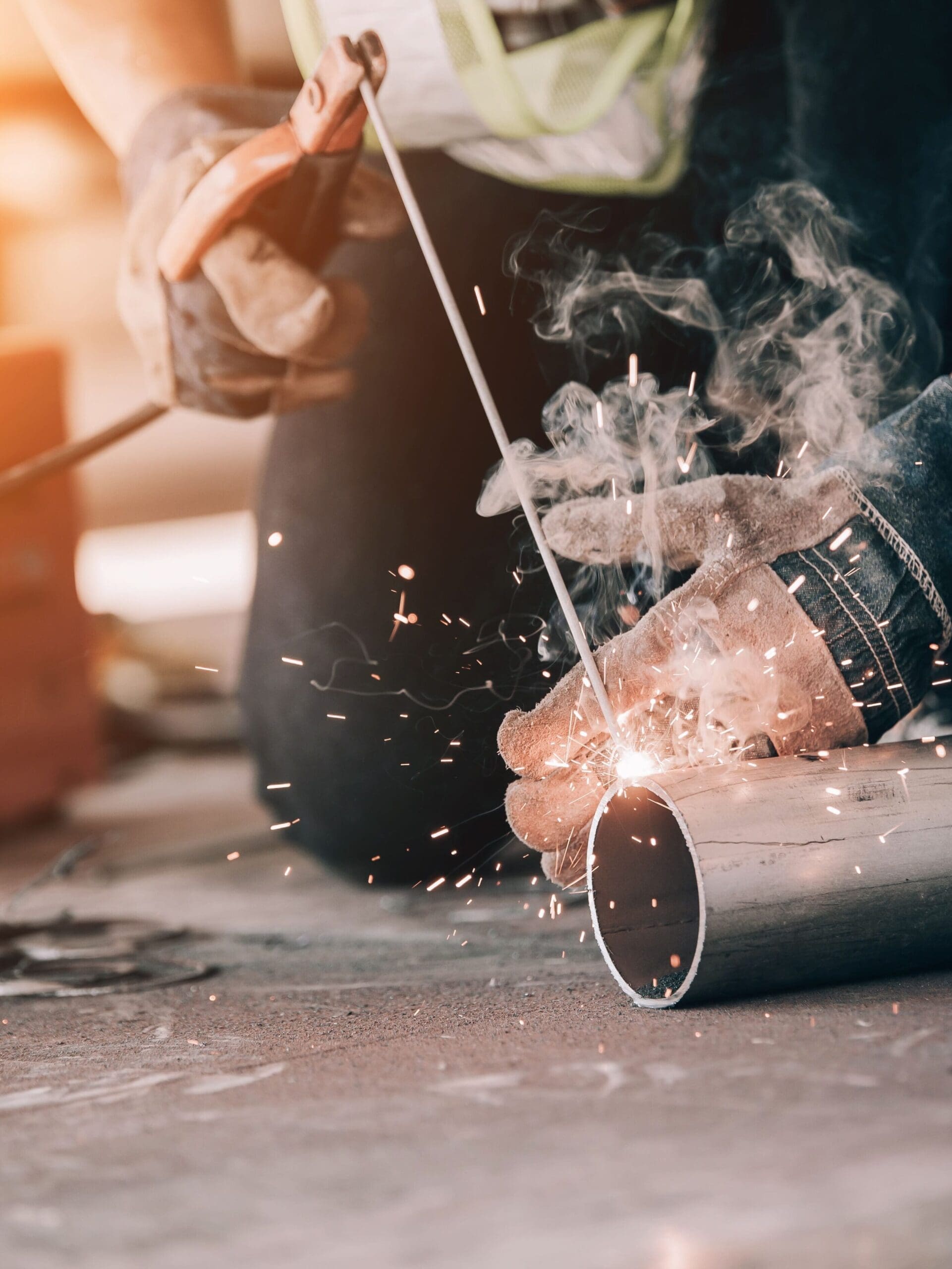
The regulatory landscape around welding fumes across industries has changed significantly in recent years. What was once considered a best practice is now a compliance requirement. OSHA and NIOSH have strengthened their guidance around worker exposure to welding fumes, making weld fume extraction a non-negotiable part of any safe manufacturing environment.
Welding processes generate a complex mix of airborne contaminants. Depending on the base metal, filler material, and process used, these can include:
Without proper air filtration for welding operations, these contaminants accumulate in the breathing zone and spread throughout the facility. The result is increased health risk, exposure liability, and the potential for significant OSHA citations.
Facilities are also under growing pressure to modernize their Indoor Air Quality (IAQ) infrastructure. Aging ventilation systems and general dilution strategies are no longer sufficient. Source-capture technology and high-efficiency filtration have become the standard for any operation that takes worker safety and regulatory compliance seriously.
Air Purifiers, Inc. provides complete welding air filtration systems, from initial assessment and system design through installation and ongoing maintenance. We work directly with facility managers and EHS teams to evaluate contamination sources, recommend the right equipment, and ensure everything performs to spec from day one.
OSHA and NIOSH have established Permissible Exposure Limits (PELs) and Recommended Exposure Limits (RELs) for the contaminants most commonly produced by welding operations. Facilities that exceed these limits face enforcement action, and the burden of proof falls on the employer.
A properly designed weld fume extraction system is one of the most direct ways to control worker exposure and stay below required thresholds. But equipment alone is not enough. Systems need to be maintained, inspected, and performance-tested regularly to confirm they are still performing as designed, including filter condition, airflow rates, and capture velocity at the source.
Air Purifiers, Inc. provides inspection and maintenance services to help facilities document system performance, support compliance audits, and address issues before they become violations.
Our welding air filtration systems are built around performance, compliance, and long-term reliability. Key features include the following.
For applications involving stainless steel, chrome-coated metals, or other materials that generate fine, hazardous particulate, high-efficiency filtration is essential for meeting occupational exposure limits. The right filter specification depends on your materials and process, and our team will make sure your system is configured to handle what your facility actually produces.
Our systems can include real-time filter monitoring that alerts your team when filter changes are needed, reducing the risk of operating a degraded system. Remote monitoring capabilities allow EHS teams and facility managers to track system performance without requiring constant on-floor oversight.
Properly sized welding fume filtration systems reduce unnecessary load on your HVAC equipment. By capturing contaminants at the source and recirculating clean air, your facility replaces less-conditioned air, resulting in measurable energy savings over time.
Not every welding environment calls for the same solution. Understanding the difference between source capture and ambient filtration will help you make a more informed decision for your facility.
Source-capture systems extract fumes directly at the point of generation, at or very near the welding arc. This approach provides the highest level of contaminant control because it intercepts fumes before they enter the breathing zone or spread through the facility.
Source capture is generally preferred when OSHA compliance is the primary driver, when welding involves high-hazard materials like stainless steel or chrome-coated metals, or when individual workstation control is practical.
Best for: Fixed workstations, high-hazard materials, and facilities with strict PEL requirements.
Ambient systems, often referred to as overhead air cleaners, filter the general air volume of the facility rather than capturing fumes at the source. These systems are effective at reducing overall airborne particulate levels and can serve as a supplemental layer of protection in environments where source capture is not fully practical, such as large open bays or areas with highly variable weld locations.
Best for: Large open facilities, supplemental air cleaning, and operations where source capture is not feasible at every station.
In many facilities, the most effective solution combines both approaches. Air Purifiers, Inc. can help you assess your environment and design a system that delivers the right level of control where it matters most.

Whether you are evaluating your first welding fume extraction system or upgrading an existing setup, Air Purifiers, Inc. provides the assessment, equipment, and ongoing support to get it right.
Schedule an assessment with us today.
Choosing the right welding air filtration system involves more than picking a unit off a spec sheet. It means understanding your process, your materials, and your compliance obligations. These are some of the questions we hear most often from facility managers and EHS teams, along with straightforward answers to help guide your decision.
Source capture extracts fumes directly at the welding arc, preventing them from entering the breathing zone or spreading throughout the facility. Ambient filtration cleans the general air volume of the space. Source capture is typically more effective for meeting PEL requirements, while ambient systems work well as a supplement or in environments where fixed source capture is not practical at every station.
Replacement frequency depends on the volume of welding activity, the materials being welded, and the specific system in use. Systems with smart monitoring will alert you when the filter condition drops below acceptable levels. As a general rule, filters should be inspected regularly and replaced according to the manufacturer’s guidelines or when airflow performance decreases. Delaying filter replacement reduces capture efficiency and can put workers at risk.
Yes. Air Purifiers, Inc. offers filtration solutions specifically designed for robotic and automated welding environments. These systems are engineered to integrate with enclosed or semi-enclosed robotic cells and handle the consistent, high-volume fume loads generated by automated processes.
A properly positioned and calibrated source-capture system should not disrupt shielding gas coverage. The key is correct placement and airflow velocity. Extraction arms positioned too close to the arc or with excessive suction can create turbulence that affects weld quality. Our team accounts for this during system design, ensuring you get effective fume control without compromising your weld.


